
How much does an area really cost to live in after you buy?
A practical, step by step method to work out the full, recurring cost of living in a specific UK area after you buy a home. Use official sources to price council tax, energy, water, transport, permits, insurance and more; convert tariffs into a monthly plan; compare neighbourhoods like for like; and stress test your numbers so your budget holds up when prices change.
What this guide does and how to use it
Buying the home is only half the story. This guide shows you how to price the recurring cost of living in a specific UK area after you complete, using official sources and a consistent method you can reuse each year or quarter.
You will define a full basket of running costs, pull area specific prices from primary sources, turn tariffs and usage into a clear monthly budget, compare neighbourhoods on a like for like basis, and stress test your plan so it stands up to changes in council tax, energy, fares, service charges and insurance.
All examples are illustrative and labelled as assumptions where they are not fixed fees set by public bodies or regulators. Always swap in the latest figures from the linked official sources for your own plan.
Key ideas before you start
Step by step: build your area running cost budget
The area cost audit loop you can reuse
Use this loop to go from a specific address to a defendable monthly plan you can compare against other areas, update on a schedule, and stress test when prices move.
Worked examples you can copy, then swap in your local numbers
These examples show how to turn official local prices and reasonable usage assumptions into a monthly plan. Where a figure is not set by statute or a regulator, it is labelled as an assumption. Always replace assumptions with your own usage and the latest tariffs for your region and suppliers.
Property and travel facts: Borough Waltham Forest; tenure leasehold; buildings insurance within the service charge; assume ground rent £0 on a post 2022 regulated new lease noting that older leases can differ; two adults; commute priced on Zone 1 to 3 weekly cap or Travelcard equivalent.
Inputs: Council tax Band D 2026 to 27 is £2,386.96 per year, which is £198.91 per month. Service charge assumed at £2,000 per year, which is £166.67 per month. Energy usage assumed at 2,400 kWh electricity and 8,000 kWh gas per year with April to June 2026 cap era averages for the London region conceptually applied; the illustrative bill is about £1,394 per year, which is £116.17 per month. Water and sewerage on a Thames Water metered two person profile is assumed at £35.00 per month. Contents insurance assumed at £100 per year, which is £8.33 per month. A residents’ parking permit in a CPZ for a car in the 101 to 170 g/km CO₂ band is £95 per year, which is £7.92 per month. Broadband £28.00 per month with Ofcom rules on how any in contract rises must be presented on new contracts. Mobile £15.00 per month. TV licence £180 per year, which is £15.00 per month. Childcare £0 in this scenario. Personal sinking fund for internal wear and tear £25.00 per month. Travel: 7 day Zone 1 to 3 price £52.50, Monthly Travelcard £201.60 using the 3.84 factor rounded.
Monthly total: The sum of these lines is £817.60 per month.
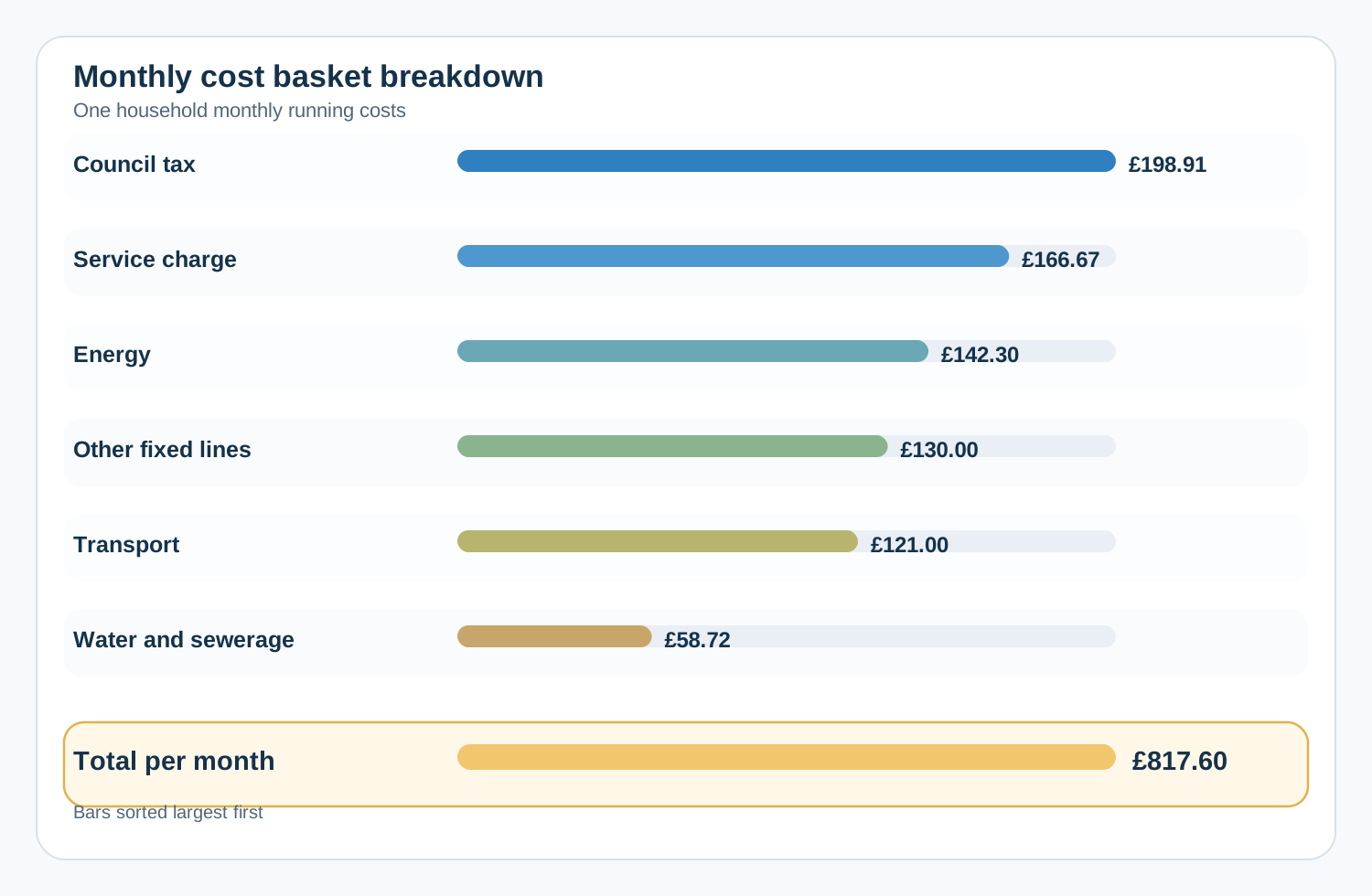
Stress test: A 10 per cent rise on the energy line adds £11.62, taking the total to about £829.22 per month.
| Item | Basis | Per month |
|---|---|---|
| Council tax | Band D 2026–27, £2,386.96 / year | £198.91 |
| Service charge | Assumed £2,000 / year | £166.67 |
| Travel | Monthly Travelcard, Zone 1–3 (£52.50 × 3.84) | £201.60 |
| Energy | 2,400 kWh electricity + 8,000 kWh gas, about £1,394 / year (assumption) | £116.17 |
| Water and sewerage | Thames Water metered, two-person profile (assumption) | £35.00 |
| Broadband | Assumed package | £28.00 |
| Personal sinking fund | Internal wear and tear allowance (assumption) | £25.00 |
| Mobile | Assumed SIM plan | £15.00 |
| TV licence | £180 / year | £15.00 |
| Contents insurance | Assumed £100 / year | £8.33 |
| Residents’ parking permit | CPZ, 101–170 g/km CO₂ band, £95 / year | £7.92 |
| Childcare | £0 in this scenario | £0.00 |
| Monthly total | £817.60 | |
Property and travel facts: Authority Leeds City Council; tenure freehold; two adults; no childcare in this scenario; two cars, petrol, 8,000 miles each per year; residential parking free; there is no private car CAZ charge in Leeds.
Inputs: Council tax Band C 2026 to 27 is £2,019.12 per year, which is £168.26 per month. Energy usage assumed at 3,000 kWh electricity and 12,000 kWh gas per year with the Ofgem cap framework for the Yorkshire region conceptually applied; the illustrative bill is about £1,784 per year, which is £148.67 per month. Water and sewerage on a Yorkshire Water metered family profile is assumed at £40.00 per month. Home insurance for buildings plus contents is assumed at £350 per year, which is £29.17 per month baseline. Fuel for 16,000 miles a year total at 40 mpg and 157 pence per litre petrol (April 2026 benchmark) is about 1,818 litres, about £2,855 per year, which is £237.90 per month using the official weekly price series for the date of analysis. Broadband £28.00 per month with availability checked via Ofcom. Mobile £15.00 per month. TV licence £15.00 per month. Parking and local road user charges £0. Routine maintenance sinking fund for a freehold property assumed at £250.00 per month based on age or survey findings and a target annual allowance.
Monthly total: The sum of these lines is about £932.00 per month.
Stress test: A 20 per cent swing on home insurance shifts the monthly total by plus or minus £5.83, giving a range of about £926.17 to £937.83 per month.
| Item | Basis | Per month |
|---|---|---|
| Council tax | Band C 2026–27, £2,019.12 / year | £168.26 |
| Energy | 3,000 kWh electricity + 12,000 kWh gas, about £1,784 / year (assumption) | £148.67 |
| Water and sewerage | Yorkshire Water metered family profile (assumption) | £40.00 |
| Home insurance | Buildings + contents, assumed £350 / year | £29.17 |
| Fuel | 16,000 miles / year at 40 mpg and 157p / litre (assumption) | £237.90 |
| Broadband | Assumed package | £28.00 |
| Mobile | Assumed SIM plan | £15.00 |
| TV licence | £180 / year | £15.00 |
| Parking and road-user charges | £0 in this scenario | £0.00 |
| Routine maintenance sinking fund | Allowance based on property age or survey findings (assumption) | £250.00 |
| Childcare | £0 in this scenario | £0.00 |
| Monthly total | £932.00 | |
Checklists you can lift into your plan
Use these concise lists before you offer and when you set up your accounts after you move in.
Pre offer area cost checklist
Move in running cost setup checklist
Glossary
- Band D equivalent
A central reference point used in council tax analysis. Each authority sets a pound amount per band, including Band D.
- Cap period
The Ofgem price cap quarter, for example 1 April to 30 June 2026, during which specific regional unit rates and standing charges apply on standard variable tariffs.
- CPZ
Controlled Parking Zone. Residents usually need a permit to park during the hours of control set by the local authority.
- Ground rent
A periodic payment in some residential leases. Ground rent is set to a peppercorn on most new long residential leases granted on or after 30 June 2022 in England and Wales. Older leases can still have ground rent unless varied or extended under statute.
- Reserve or sinking fund
Money collected via service charges to pay for infrequent major works under the lease. The lease will set the rules on collection and use.
- Standing charge
The fixed daily amount on energy bills that you pay regardless of usage. It is set within the Ofgem price cap methodology for standard variable tariffs.
- TDCV
Typical Domestic Consumption Values. Ofgem’s benchmarks for annual kWh consumption used as a starting point for budgeting, to be adjusted for your home and occupancy.
Verified callouts
Council tax bands and how to verify a property’s band
The VOA maintains the valuation list and provides the official Check your Council Tax band service for England and Wales. Banding rules and challenge routes are explained on GOV.UK.
Energy price cap, unit rates and standing charges
The Ofgem price cap limits pence per kWh and standing charges for customers on standard variable tariffs. It is not a cap on your total bill and varies by region and payment method. Regional unit rates and standing charges are published for each quarter.
Season tickets and daily caps: computing commute costs
In London, the weekly cap equals the 7 day Travelcard for the same zones and monthly Travelcards are calculated as 3.84 times the 7 day price, rounded to the nearest 10p. Use the official caps and Travelcard tables.
Related definitions and deep dives
Definitions
- Council tax: bands, precepts, discounts and how to find your local rate
- Energy bills: unit rates, standing charges, meter types, TDCVs and quarterly cap cadence
- Water and sewerage bills: metered vs unmetered, assessed charges and surface water drainage
- Service charges and reserve funds: what the lease allows, budgets, Section 20 and major works
- Ground rent: current law on new leases and common exceptions
- Insurance: buildings vs contents, rebuild cost vs market value, excesses and exclusions
- Transport choices: capping vs Travelcards, season tickets outside London, mapping commutes
- Road user charges: ULEZ, CAZ, Congestion Charge overview and how to check compliance
- Broadband and mobile: availability checks, contract terms and mid contract price rules
- Childcare: funding entitlements, session structures and how to compare settings
- Maintenance planning: setting a sinking fund from survey findings and age related profiles
Sources
- Check your Council Tax band
- Council Tax guide 2026 to 2027
- Council tax bands and charges 2026/27
- Council tax levels set by local authorities in England 2026 to 2027: technical notes
- Energy price cap explained
- Energy price cap levels and annexes for 1 April to 30 June 2026
- Ofgem Typical Domestic Consumption Values: briefing
- Household Charges Scheme 2026 to 2027
- How we work out your bill: household charges 2026 to 2027
- Charging framework and rules
- Leasehold property: service charges and other expenses
- How to lease
- Leasehold Reform Ground Rent Act 2022: guidance for leaseholders, landlords and managing agents
- Reserve or sinking funds: guidance
- Fares from 1 March 2026
- Travelcards and group tickets
- Fare capping
- Residents’ parking permits
- Leeds Clean Air Zone has achieved its aims early and is no longer required
- Broadband and mobile coverage checker
- Ofcom bans mid contract price rises linked to inflation: pounds and pence rule from 17 January 2025
- How much does a TV Licence cost?
- Childcare Survey 2026
- Road fuel prices: 27 April 2026
- Choosing the right home insurance
- Home insurance premiums rise but remain below historic peaks
Join the discussion
Spotted something wrong, or want to add to this? Comments are reviewed before they appear.
Comments are reviewed before they appear. Community rules
-
The mortgage or rent may fit your budget while commuting, parking, childcare, insurance, energy, and council tax quietly push the real cost much higher. Which ongoing cost has surprised you most after moving to a new area?